Have an idea for a clothing brand but don't know where to start producing? It's one of the most common questions among those who want to launch their own brand in Portugal. In this article we focus on the part that trips people up the most: how to go from design to physical piece, what techniques exist, how many pieces you need, and how the production process works with a specialized studio.
What you need to have defined before moving into production
Before contacting any producer or uploading a file to a configurator, there are a few decisions that need to be made. Moving forward without them almost always results in rework and unnecessary costs.
The brand's visual identity
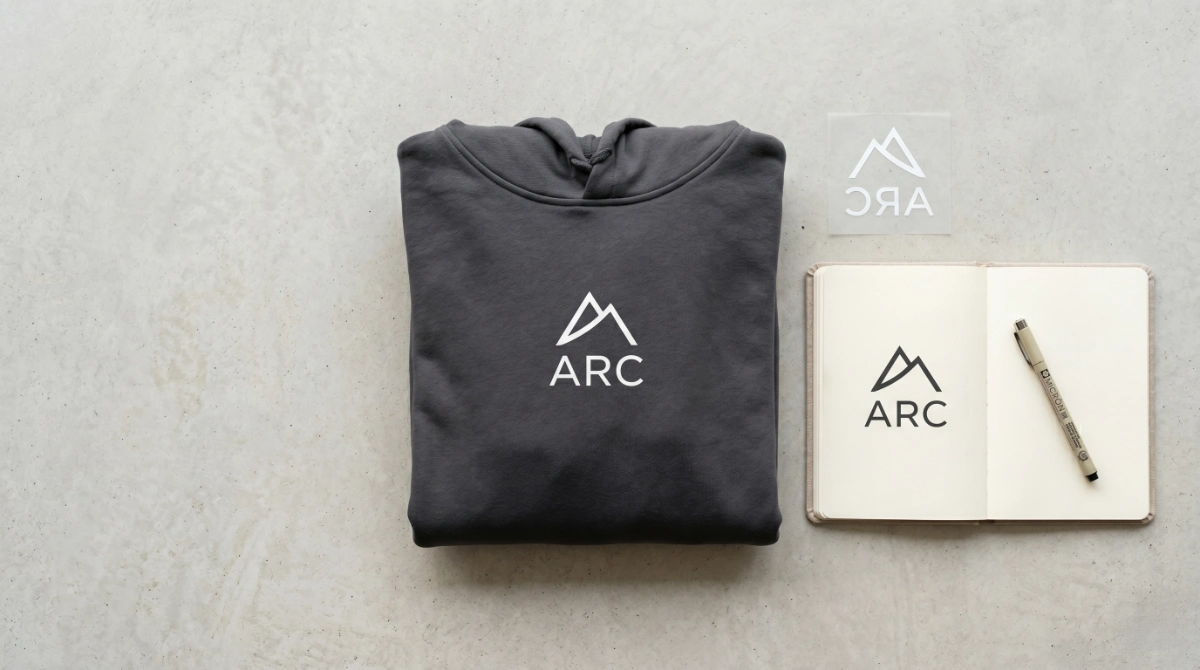
The design of the pieces starts from the brand's identity. That means having the logo in vector format, the color palette with exact references (Pantone, CMYK, or HEX), and a clear idea of the style you want to convey. For example, streetwear, minimalism, premium, and casual each call for different choices in terms of the base product, the customization technique, and the placement on the piece.
So, if you don't have the final design yet, this is the time to invest in that before anything else. A poorly prepared file delays production and can compromise the final result. That's why you should check out the Matter Studio artwork submission guide to understand exactly what's needed.
The products that will make up the collection
You don't need to start with a huge catalog. In fact, brands that launch with a focused offer tend to do better than ones trying to cover everything at once. Pick two or three core products for your first collection. For example, a t-shirt and a hoodie in the same design already make up a coherent collection that's enough to test the market.
The quantity you want to produce
This is usually the point that worries beginners the most. The good news is that you no longer need big orders to get quality production. Later in this article, we'll explain how small production runs work and what you can expect in terms of cost and turnaround time.
What personalization technique makes sense for your brand?
The personalization technique is one of the most important decisions when producing clothing for your own brand. It directly affects the final look of the piece, its durability, and the cost per unit. There are four main options available.
DTF (Direct to Film)
DTF is currently the most versatile technique for clothing brands just starting out. It lets you print designs with unlimited colors, gradients, fine details, and photos directly onto the piece, with no limit on the number of colors. It works well both for small runs and larger volumes, making it ideal for anyone who wants to test the market before scaling.
On top of that, in terms of durability, DTF has come a long way, and when applied correctly, it holds up well to wear and washing. That's why it's the most recommended technique for complex designs or collections with lots of color.
Embroidery
Embroidery gives a premium finish that's instantly associated with quality. It works especially well for simple logos, typography, and elements with few details. In terms of brand positioning, an embroidered piece conveys a level of craftsmanship that printing can hardly match.
However, embroidery's limitation lies in design complexity. Gradients, photos, and very fine details can't be replicated with this technique. Even so, for brands with a cleaner graphic identity, it's often the right choice.
If you're unsure which of the two techniques makes more sense for your project, read the article DTF or embroidery: which is the best technique to personalize your clothing?
Screen printing
Screen printing is the classic technique in the textile industry. It delivers very vivid colors and high durability, and it's especially cost-competitive when volume is high. However, it has limitations on the number of colors per design and tends to be less practical for small runs.
That's why, for brands in their early stages, screen printing starts to make sense once the volume per design justifies preparing the screens. In short, it's better suited to a second production phase than to the launch.
Heat transfer vinyl
Vinyl is a simple technique with good durability for designs with one or a few solid colors. It's often used for lettering, numbers, and minimalist applications. It also has the advantage of being affordable and working well in small quantities.
Producing in small runs: is it really possible?
Yes, and that's exactly why the clothing brand business model has changed so much in recent years. In the past, producing quality clothing meant ordering hundreds of pieces per style. Today, with techniques like DTF and embroidery, it's possible to produce very small runs without compromising the result.
At Matter Studio you can start with small quantities, letting you validate a design or product before investing at a larger scale. This approach has several practical advantages for a brand in its launch phase:
- Reduces initial financial risk
- Lets you test market reception before scaling
- Avoids dead stock of products that might not work out
- Gives you flexibility to adjust designs between collections
To find out the minimum quantities available per product and technique, you can check directly on the Matter Studio store or talk to the team through the customer support page.
How the process works from design to final piece at Matter Studio
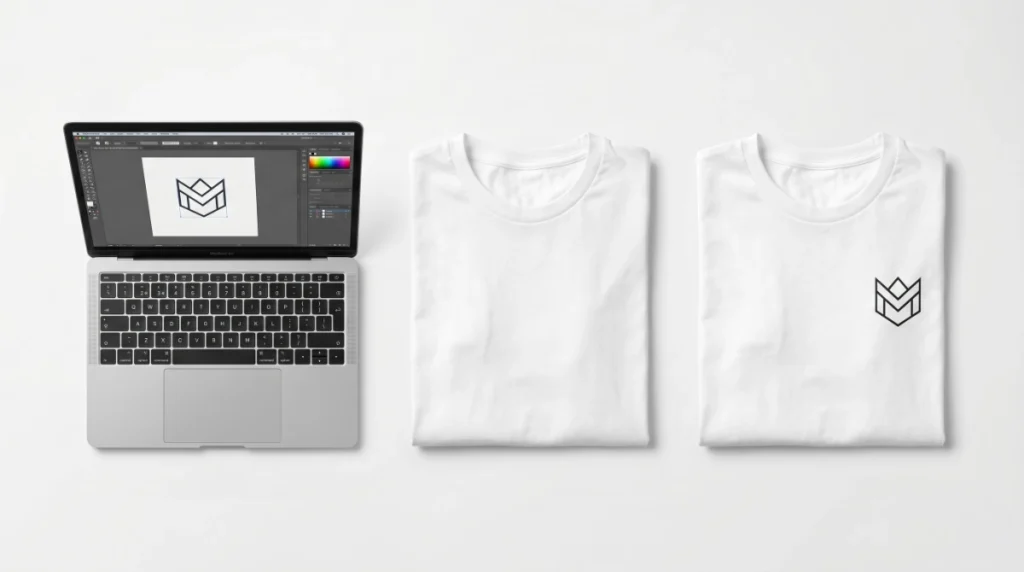
For anyone who's never produced their own clothing brand before, understanding how the end-to-end process works is essential. At Matter Studio, the process is organized into simple steps.
1. Product Selection
The first step is choosing the base pieces that will make up the collection. The Matter Studio catalog includes t-shirts, hoodies, sweatshirts, caps and bags, all selected with a baseline quality standard. Each product has a spec sheet with fabric composition, weight, and size chart.
2. Design Preparation and Submission
Once you've chosen the product, the next step is to prepare the design file according to the specifications of the chosen technique. Matter Studio's artwork submission guide details the accepted formats, minimum resolutions, and specific requirements per technique. In particular, a well-prepared file at this stage is what guarantees a result that's true to the original design.
3. Online Order Setup
Matter Studio's online configurator lets you upload the design, set the placement position, choose quantities by size, and see a preview of the result before confirming. The whole process happens directly in the store, with no need to exchange emails for every detail.
4. Studio Production
After the order is confirmed, production happens in-house at Matter Studio, with its own equipment and no middlemen. In other words, the team that receives the file is the same one that produces the piece, which reduces the margin for error and makes it easier to communicate if any questions come up.
5. Delivery
Once production is complete, the pieces are shipped to the address provided. Production times vary depending on the technique and volume, but Matter Studio communicates estimated timelines transparently at every stage of the order.
What Matter Studio doesn't do and where to find those services
It's important to be upfront about the scope of the service. Matter Studio specializes in personalizing blank clothing, meaning applying your design to existing pieces from the catalog. Because of this, it doesn't offer its own cut-and-sew production or from-scratch pieces with custom patterns.
For brands that want fully custom-made pieces, with exclusive cutting and sewing, the solution is to work with a textile factory or atelier specialized in this type of production. However, for the vast majority of brands just starting out, personalizing quality blank clothing is more than enough to launch a solid collection and validate the project in the market.
You can learn more about what Matter Studio does and how it works on the studio page.
Frequently asked questions about producing clothing for your own brand
What's the minimum quantity to produce clothing for my brand?
It depends on the technique chosen. With DTF and embroidery it's possible to produce small quantities, including in some cases a single piece. Check the specific conditions per product directly on the Matter Studio store.
Do I need to have my brand registered to produce clothing with a logo?
For production purposes, no. You can order pieces with your logo without having a registered brand. Brand registration is a separate legal matter that protects your identity commercially, but it's not a requirement to move forward with production.
Can I use my own logo even if I'm not a designer?
Yes, as long as the file is in the correct format and quality. The artwork submission guide explains exactly what's needed. If you need help preparing the file, that's the place to start.
How long does it take to produce a first collection?
On average, between 5 to 15 business days after order confirmation and design approval, depending on the technique and volume. For specific timelines, the Matter Studio team can give you an estimate before you confirm your order.
Is it possible to make a sample before ordering the full collection?
Yes. For anyone launching a brand, producing a sample piece before moving forward with the collection is a highly recommended approach. Talk to the team through the customer support page to understand the terms.
Does Matter Studio work with custom labels?
For information about this type of additional service, the best option is to talk directly with the team through the customer support page.
Ready to produce your first collection?
The hardest step is always the first one. However, with the design ready and a clear idea of what you want to produce, the process is simpler than it seems. Matter Studio was built precisely to support brands at the startup stage, with domestic production, direct communication, and no impossible minimums.
So, start by exploring the catalog, choose the pieces that make sense for your brand, and use the configurator to see the result before confirming.
Explore the catalog and start producing your brand at Matter Studio