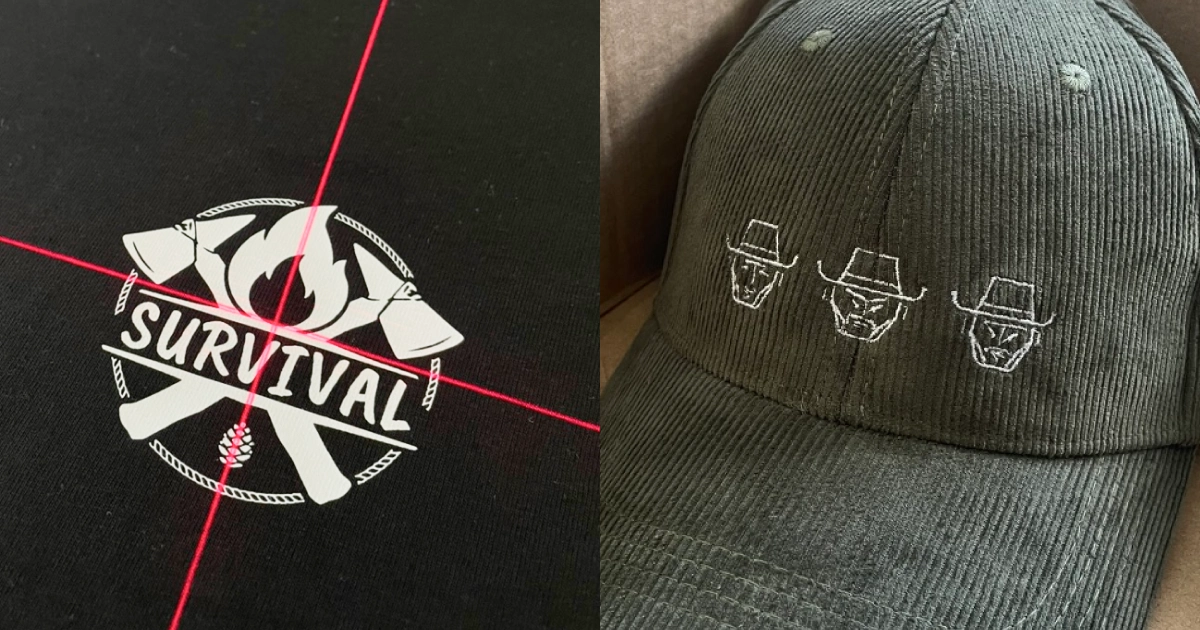
If you've ever tried ordering custom clothing, chances are you've run into this choice: DTF printing or embroidery? The two techniques produce completely different results, and the right choice depends on your design, the piece you want to customize, and the final look you're going for.
In this article we break down the differences in plain terms, no technical jargon, so you can go into your next order with the decision already made.
Quick answer
- Design with lots of colors, gradients, or photography: DTF.
- Simple logo, text, or monogram, with a premium finish: embroidery.
- Cap: embroidery, since DTF doesn't sit well on curved surfaces.
- Large area, like the full back: DTF.
- Item for heavy use and frequent washing: embroidery.
If you want to understand the reasoning behind each case, keep reading.
What is DTF printing?
DTF stands for Direct to Film. Here's how it works: your design is printed onto a special film, coated with a layer of adhesive powder, and then transferred onto the fabric using a heat press with controlled heat and pressure.
The result is a print with vibrant colors, crisp details, and good flexibility on fabric. DTF printing works on virtually any type of fabric, whether cotton, polyester, or blends, and works well on both light and dark garments.
What you can print with DTF:
- Photos and images with gradients
- Illustrations with lots of colors and fine details
- Complex logos with shadows or effects
- Any design that uses more than 6 colors
What is embroidery?
Embroidery is a technique with centuries of history. Instead of applying ink, an embroidery machine sews the design directly into the fabric with colored threads, stitch by stitch, creating a three-dimensional texture you can see and feel.
The result is a premium, textured finish that conveys quality and durability. Embroidery holds up to heavy washing and keeps its original look far longer than any printing technique.
What works well in embroidery:
- Simple, clean logos
- Text and monograms
- Designs with defined outlines and up to 6 solid colors
- Pieces that will get frequent or professional use
The main differences, side by side
| DTF Printing | Embroidery | |
|---|---|---|
| Colors | Unlimited | Up to 6 solid colors |
| Gradients and photos | Yes | No |
| Feel on fabric | Slight raised texture from the print | Textured raised feel from the threads |
| Durability | High | Very high |
| Best for | Complex designs, illustrations | Logos, text, premium pieces |
| Recommended items | T-shirts, tops, sweatshirts | Caps, polos, sweatshirts, hoodies |
When to choose DTF
Choose DTF printing when your design has lots of detail, varied colors, or elements that embroidery can't faithfully reproduce, like gradients, shadows, or photos.
It's also the best option when you want to print a larger area, like the full front panel of a hoodie or the back of a t-shirt. DTF printing doesn't have the size limitations that embroidery does.
At Matter Studio we use DTF for designs that require maximum fidelity to the original. If you upload a PNG file with a transparent background, the print comes out exactly as you see it on screen.
When to choose embroidery
Choose embroidery when you're after a premium finish that stands out for its texture and perceived quality. It's the go-to technique for corporate pieces, uniforms, caps, and any item where the brand or logo needs to communicate professionalism and durability.
Embroidery is also the right choice for pieces that will be worn often and washed many times. Embroidery threads don't fade or peel the way a print can over time if it isn't cared for properly.
The main limitation is detail: designs that are very complex, with very thin lines or very small letters, lose definition when embroidered. The general rule is that text shouldn't be less than 6 mm tall, and isolated lines shouldn't be thinner than 3 to 4mm.
Are you an illustrator or artist with questions about your own art? We wrote a guide just for that: printing your illustrations, from file to price.
Not sure which to pick?
In practice, a lot of our customers place their order without knowing exactly which technique to choose. And that's totally fine.
When you get your order confirmation, our team reviews your file and reaches out if the design has features that could compromise the result, whether it's too detailed for embroidery or has insufficient resolution for printing.
You can also check out our customer support page and check out the FAQ on the topic, ask Matt for his take, or get in touch with our team by filling out the contact form or emailing geral@matterstu.com.
A practical example
Say you want to customize an oversized hoodie with your brand's logo.
If the logo has lots of colors, gradients, or complex organic shapes, DTF printing is the safer choice. If the logo is simple, with solid colors and clean shapes, embroidery will give you a much more premium and long-lasting result.
For caps, embroidery is almost always the better option because DTF printing on curved surfaces has technical limitations that embroidery doesn't have.
Frequently asked questions about DTF and embroidery
DTF or embroidery: which lasts longer?
Embroidery. Since the design is made of threads stitched into the fabric, it won't fade or peel with washing. A well-cared-for DTF print also lasts a long time, but embroidery is the most durable technique for heavy use.
Can I embroider a photo or a design with gradients?
No. Embroidery reproduces up to 6 solid colors and can't do gradients, shadows, or photographs. For those cases, the answer is always DTF, which prints unlimited colors with photographic detail.
What's the minimum text size for embroidery?
As a rule, text shouldn't be smaller than 6 mm in height, and isolated lines shouldn't be thinner than 3 to 4 mm. Below this, embroidery loses definition. If your design has very small letters or very thin strokes, DTF reproduces them better.
Can I embroider a thin t-shirt?
It's not advisable on very lightweight fabrics. Embroidery pierces the fabric with thousands of stitches, and thin fabric wrinkles around the design. For embroidery, go for pieces starting at 180 g/m². That's why embroidery looks so good on polos, sweatshirts, hoodies, and caps. Check out our guide on which weight to choose to understand the weight of each piece.
Which technique is best for caps?
Embroidery, almost always. DTF printing on curved surfaces like the front of a cap has technical limitations that embroidery doesn't, and the raised texture of embroidery gives a more professional finish.
Does DTF print peel over time?
No, if properly cared for. Wash the piece inside out, in cold or lukewarm water, and avoid ironing directly on the print. With this care, a DTF print stays vibrant for many years.
How many colors can I use with each technique?
With DTF, unlimited colors, including gradients and photographs. With embroidery, up to 6 solid colors: each color is a different thread on the machine.
Quick recap
Choose DTF if: your design has lots of colors, gradients, photos, or fine details, and you're customizing pieces with thinner fabric like t-shirts or tops.
Choose embroidery if: your design is simple, you want a premium finish with texture, or you're customizing caps and pieces for professional use.
Not sure? Place your order and our team will help you decide before moving into production.
Need uniforms for a café, restaurant, or hotel? Check out our guide to custom uniforms for restaurants, with the right piece for every role and the technique that holds up to washing.